
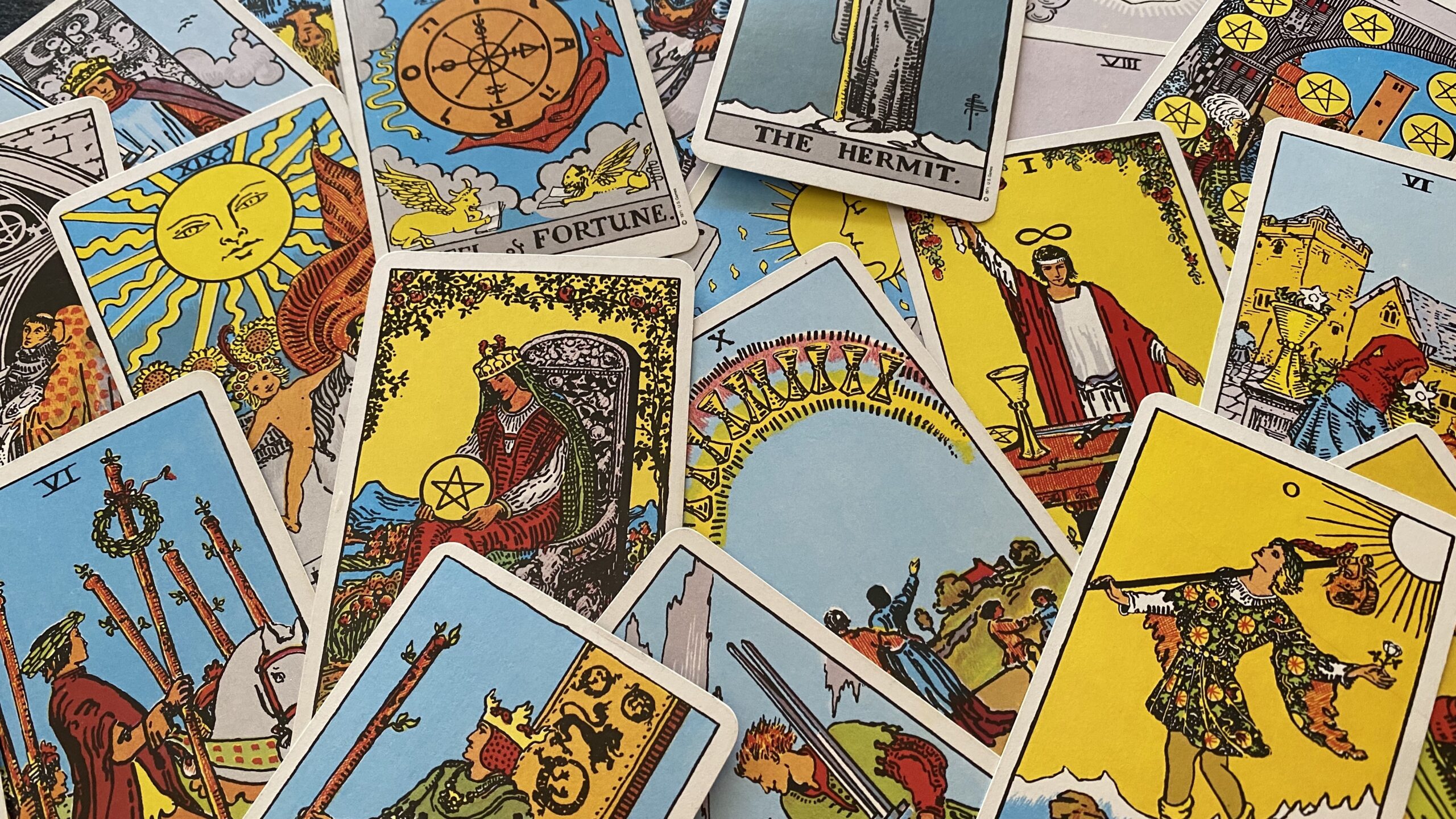
Let’s be honest – this is a question a lot of people ask themselves quietly, maybe even a little guiltily. You go to church on Sunday, you pray, you believe. And yet, at some point, you’ve wondered what a tarot reader or a clairvoyant might say about your future. Does that make you a hypocrite ? Does it mean your faith isn’t real ?
Frankly, I don’t think it’s that simple.
A Tension That’s Been Around Forever
This isn’t a modern dilemma. For centuries, people of faith have navigated the line between official religious doctrine and folk spiritual practices. In medieval Europe, for example, many devout Christians still consulted local healers or paid attention to omens – all while attending mass every week. The two things coexisted, messily, but they coexisted.
Today, the same kind of tension plays out differently. Someone might be a practising Catholic, light a candle at church, and also occasionally check their horoscope or visit a psychic. Are those things compatible ? Officially, in most major religions, the answer is no. But in real life ? It’s more complicated than that.
What the Main Religions Actually Say
Let’s be clear about where the major faiths stand, because it matters.
Christianity, across most of its traditions, is pretty explicit. The Bible – in Deuteronomy, in Isaiah, in the New Testament – warns against divination, consulting mediums, or seeking knowledge of the future through supernatural means outside of God. The Catholic Church categorises fortune-telling under practices that contradict faith. Protestant denominations largely agree.
Islam is equally firm. Visiting a fortune-teller (kahin) is considered forbidden, and some hadith suggest that even going to one – regardless of whether you believe them – is a serious matter.
Judaism has similar prohibitions in the Torah. Buddhism, depending on the tradition, doesn’t have a divine ban, but orthodox Buddhist teachers often caution against attachment to predictions. Hinduism is more nuanced – astrology, for instance, is deeply woven into Hindu culture and isn’t seen as incompatible with devotion.
So the picture is mixed, but in the Abrahamic religions at least, the official line is pretty consistent : don’t do it.
But Why Do So Many Believers Still Go ?
Here’s what’s interesting. Despite these clear prohibitions, studies and surveys consistently show that a significant portion of religious people also engage with practices like astrology, tarot, or psychic consultations. A 2018 Pew Research study found that nearly half of Americans – including many who identify as Christians – believe in at least one element of “New Age” spirituality.
Why ? I think the honest answer is that belief is complicated. Religion addresses big questions – meaning, morality, eternity. But a lot of people visit a psychic – whether in person or through platforms like voyance-toulon.fr – not for theological reasons, but because they’re anxious about something specific. A relationship. A career decision. A loss they haven’t processed. It’s less about doctrine and more about needing reassurance, or just feeling heard.
That doesn’t mean it’s doctrinally consistent. But it explains why so many people do it anyway.
Is It Really a Contradiction ?
From a strictly theological perspective – yes, for most Abrahamic believers, it is a contradiction. The reasoning is that seeking guidance from a psychic implies either a distrust in God’s providence, or an engagement with spiritual forces that fall outside of God’s authority. That’s the official position, and it’s worth taking seriously.
But from a human, psychological perspective ? People aren’t always perfectly consistent. And maybe that’s okay to acknowledge.
Some believers draw a sharp distinction between belief and entertainment. They might say : “I don’t really think this psychic knows my future – I’m just curious, it’s a bit of fun.” Others genuinely see it as a complementary spiritual tool rather than a competing one. Neither of these positions fully resolves the theological tension, but they reflect how real people actually navigate it.
A Few Questions Worth Sitting With
 If you’re someone wrestling with this yourself, here are some things worth thinking about honestly :
Why are you going ? If it’s anxiety driving you there – fear about the future, a need for control – that’s worth examining regardless of religion. Psychics can’t actually predict the future, and if you’re relying on them for major decisions, that might be a problem even outside of any faith framework.
Does it affect your practice of faith ? For some people, it’s genuinely a passing curiosity that doesn’t touch their relationship with God. For others, it becomes a habit that slowly replaces prayer or trust. Only you know which category you’re in.
What does your tradition specifically say ? Worth actually reading, not just assuming. Some traditions are more nuanced than others.
The Bottom Line
Can you be religious and consult a psychic without contradicting yourself ? Theologically, in most mainstream traditions, the honest answer is : it’s hard to argue you’re not creating some kind of tension. The prohibitions are real and they come from a coherent place – the idea that faith involves trusting God with the unknown, rather than seeking certainty elsewhere.
But are millions of otherwise sincere believers doing exactly that ? Yes. Because humans are complex, and faith is lived imperfectly. That doesn’t make the contradiction disappear – it just means you’re probably in pretty large company.
What matters most, perhaps, is being honest with yourself about why you’re looking for answers, and whether the way you’re looking for them actually brings you closer to something meaningful – or just further into uncertainty.